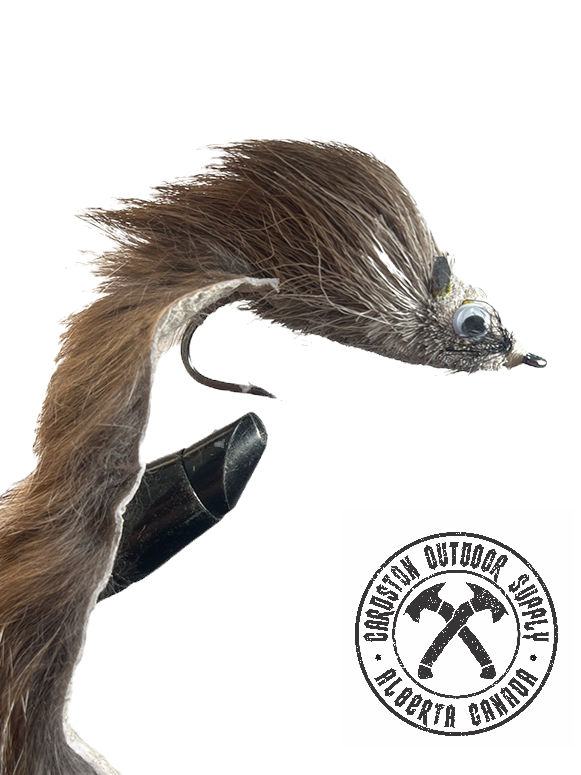
The Elk Hair Caddis is a popular dry fly pattern used by anglers, particularly for trout fishing. Pennsylvania fly tyer Al Troth created the fly in 1957. Many consider him a pioneer in the sport of fly fishing for this invention.
It imitates adult caddisflies and stoneflies, which are a significant food source for many fish species. The Elk hair on the wings makes this fly float extremely well in fast moving water. Here’s a brief overview:
Characteristics:
- Body: Usually made from materials like dubbing, often in natural colors such as tan, brown, or olive.
- Wing: The wing is made from elk hair, which gives the fly its name. The elk hair provides buoyancy, allowing the fly to sit high on the water, mimicking the natural caddisfly.
- Hackle: A palmered hackle (typically grizzly or brown) is wrapped around the body, adding to the fly’s ability to float and creating a more lifelike appearance.
- Hook: Typically tied on a standard dry fly hook, sizes can vary but commonly range from 8 to 24.
Usage:
The Elk Hair Caddis is effective in various water conditions, including fast-flowing streams and rivers, where its buoyancy and lifelike presentation excel. Anglers often use it during caddisfly hatches but it can also be effective when no hatch is occurring, as its appearance can entice strikes from opportunistic fish.
Fishing Technique:
It’s typically fished on the surface, often with a dead-drift technique. Some anglers also give it a slight twitch to mimic the movement of a struggling caddisfly, which can provoke a strike.
Sizes
For trout fishing, the most effective sizes of the Elk Hair Caddis typically range from #8 to #24. The specific size you choose can depend on several factors, including the local caddisfly population, water conditions, and the trout’s feeding habits.
- #8-#14: These are on the larger side for caddis patterns. They are great for when adult caddisflies are abundant. Or if the water is rough and you need the fly to be more visible.
- #16: This is a versatile size and often considered the “go-to” size for imitating a wide range of caddis species. It works well in various water conditions and is a good choice when you’re unsure about the exact size of the caddisflies present.
- #18: Use this smaller size when the trout are being selective or when the natural caddisflies in the area are smaller. Smaller flies can be particularly effective in slower, clearer water where trout have more time to inspect their food.
- #20-#24: Use this smaller size when the trout are being selective. Or when the natural caddisflies in the area are even smaller. Smaller flies can be particularly effective in slower, clearer water where trout have more time to inspect their food.
Tips:
- Match the Hatch: If you see caddisflies on the water, try to match the size of your fly to the natural insects.
- Adjust for Water Conditions: In fast water, larger sizes help with visibility. In slow or clear water, smaller flies often work better.
- Observation: Pay attention to what size caddisflies the trout are rising to. Sometimes, even a slight size difference can make a big difference in getting a strike.